






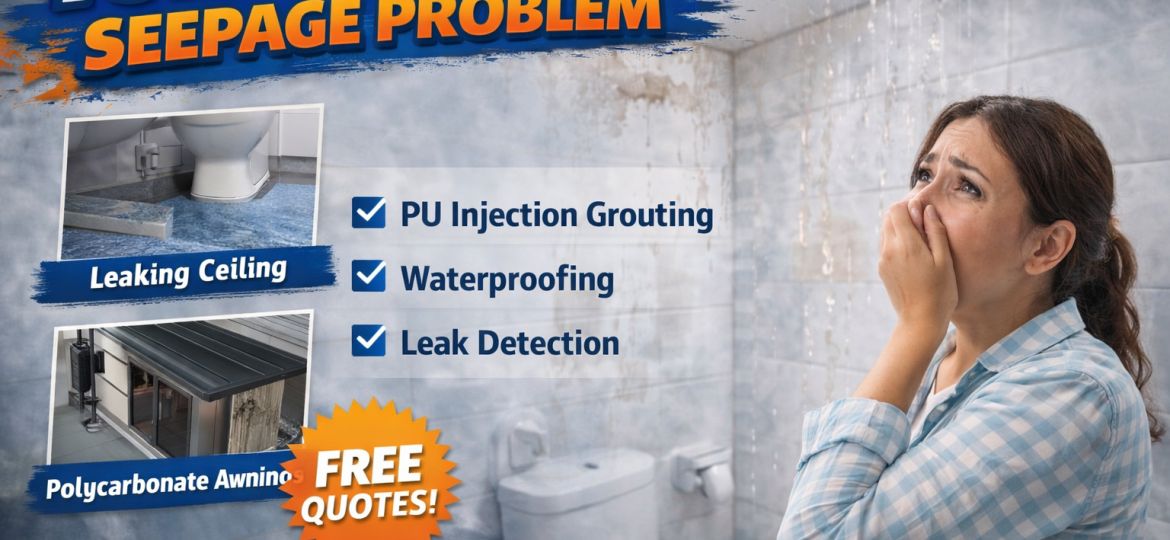
Toilet Water Seepage Problem in Singapore is a widespread issue, especially in HDB flats, condos, and older landed homes. Constant exposure to water, high humidity, aging infrastructure, and Singapore’s frequent heavy rainfall accelerate wear on waterproofing systems, leading to leaks that cause ceiling stains, mold growth, musty odors, damaged paint/tiles, electrical hazards, and neighbor disputes (e.g., water dripping to the unit below).
This seepage often originates from bathrooms/toilets and can affect ceilings, walls, or adjacent areas due to gravity and porous concrete.
Common Causes of Toilet Water Seepage in Singapore
- Failed or Deteriorated Waterproofing Membrane — The original layer under floor tiles/screed wears out after 10–15+ years due to constant moisture, poor initial installation, or inadequate curing.
- Cracked or Loose Floor/Wall Tiles & Grout — Hairline cracks allow water penetration; worn grout lines become porous.
- Leaking Toilet Bowl Base — Faulty wax seal, loose fixture, or cracked porcelain at the base lets water seep under the floor.
- Concealed Pipe Leaks — Corrosion/cracks in embedded pipes (supply, waste, or floor trap) cause hidden seepage.
- Poor Drainage & Ponding — Clogged floor traps or inadequate slopes lead to standing water that seeps through.
- Shower/ Wet Area Issues — Damaged seals around shower screens, taps, or joints.
- Building Settlement or Thermal Cracks — Minor cracks in concrete slabs from movement or heat cycles.
- Inter-Unit Leaks — In HDB/condos, upstairs unit’s toilet leakage affects downstairs ceilings (common complaint).
Signs You Have a Toilet Water Seepage Problem
- Yellow/brown water stains or damp patches on ceilings/walls below or adjacent.
- Musty smell, mold growth, or peeling paint/plaster.
- Loose/hollow-sounding tiles when tapped.
- Water pooling on floors or bubbling paint.
- Increased water bills (if from pipes).
- Visible drips during/after use or heavy rain.
- Neighbor complaints about ceiling leaks.
Popular Solutions & Repair Methods in Singapore
Specialists prioritize non-hacking options to minimize disruption, especially in occupied HDB/condos.
- PU Injection Grouting (Most Popular Non-Hacking Method) — High-pressure injection of expanding polyurethane resin into cracks/voids; seals active leaks permanently from the underside (e.g., ceiling below) or directly.
- Flood Infusion / Gravity Infusion — Flood bathroom floor with waterproofing chemical that seeps into pores/cracks; effective for widespread seepage under tiles.
- Hacking & Re-Waterproofing — Remove tiles/screed, apply new membrane (torch-on, liquid-applied, or cementitious), then re-tile; most thorough but messy/time-consuming.
- Re-Grouting & Sealing — Reapply grout, sealants, or silicone around fixtures/joints for minor issues.
- Toilet Bowl Reset/Re-Sealing — Replace wax ring/seal at base or fix cistern connections.
- Pipe Repair/Replacement — For concealed pipes; may involve partial wall/floor access.
- Thermal Imaging & Dye Testing — Non-invasive detection to pinpoint source before repair.
Key Features of Professional Toilet Seepage Repairs
- Non-Hacking/No-Dust Options — PU grouting or infusion avoids tile removal; quick (1–3 days) with minimal disruption.
- Fast Leak Stoppage — PU expands 20–30x on water contact, sealing instantly for active drips.
- Durable & Flexible — Materials resist humidity, chemicals, and movement; 5–15+ year warranties common.
- BCA-Approved Methods — Compliant for HDB/condo works; contractors handle approvals/notifications.
- Eco/Low-VOC — Modern resins minimize odor and health impact.
- Comprehensive Diagnosis — Thermal cameras, moisture meters, and flood tests ensure root cause fix (not just symptoms).
- One-Stop Service — Many include plumbing checks, tile repair, and mold remediation.
Benefits of Addressing Toilet Water Seepage Promptly
- Prevents mold/allergies and structural damage.
- Avoids HDB warnings, fines, or forced repairs.
- Reduces neighbor disputes and insurance issues.
- Restores aesthetics and property value.
- Lowers long-term costs vs. ignoring (escalates to full hacking).
Typical Repair Process
- Free Site Inspection — Diagnosis with tools/photos; identify source (toilet floor, pipes, etc.).
- Proposal & Quote — Options (non-hacking vs. hacking), timelines, costs.
- Repair Execution — Injection/grouting or hacking; dust control in occupied homes.
- Testing — Flood test to confirm seal.
- Restoration & Handover — Cleanup, warranty, maintenance tips.
Popular specialists include:
- SWC Construction (PU grouting experts, non-hacking focus).
- DryProof Waterproofing (flood infusion & PU injection).
- Le Fong (bathroom/toilet specialists).
- Waffen Waterproofing / Winborne / Prima Seal / RSF Waterproofing.
- Buildbest Roofing & Construction Pte Ltd (integrated waterproofing services).